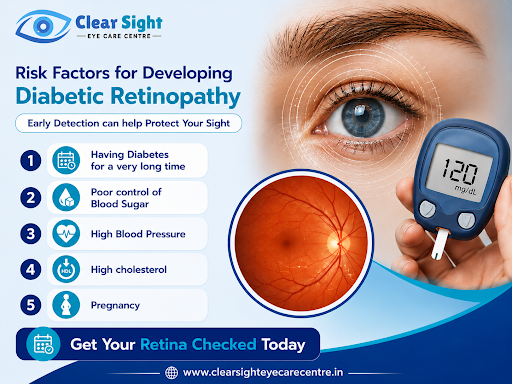
Risk Factors for Developing Diabetic Retinopathy
Diabetic retinopathy is a diabetes-related eye condition that affects the retina, the light-sensitive layer at the back of the eye. It develops when prolonged high blood sugar damages the small blood vessels in the retina. In its early stages, the condition may not cause noticeable symptoms, making regular eye examinations essential.
Several factors can increase the risk of developing diabetic retinopathy. These include having diabetes for a long time, poor blood sugar control, high blood pressure, high cholesterol, and pregnancy . Managing these risk factors can help reduce the likelihood of vision-threatening complications.
Retina Checkup in Swargate Pune plays an important role in detecting retinal changes before vision is affected. Early diagnosis allows timely monitoring and treatment, helping preserve long-term eye health.
People with diabetes should undergo regular retinal examinations even if their vision appears normal, as diabetic retinopathy can progress silently. Routine screening, along with good control of blood sugar, blood pressure, and cholesterol, supports healthy vision and helps reduce the risk of permanent vision loss.